Transparency
Our Pricing, Explained
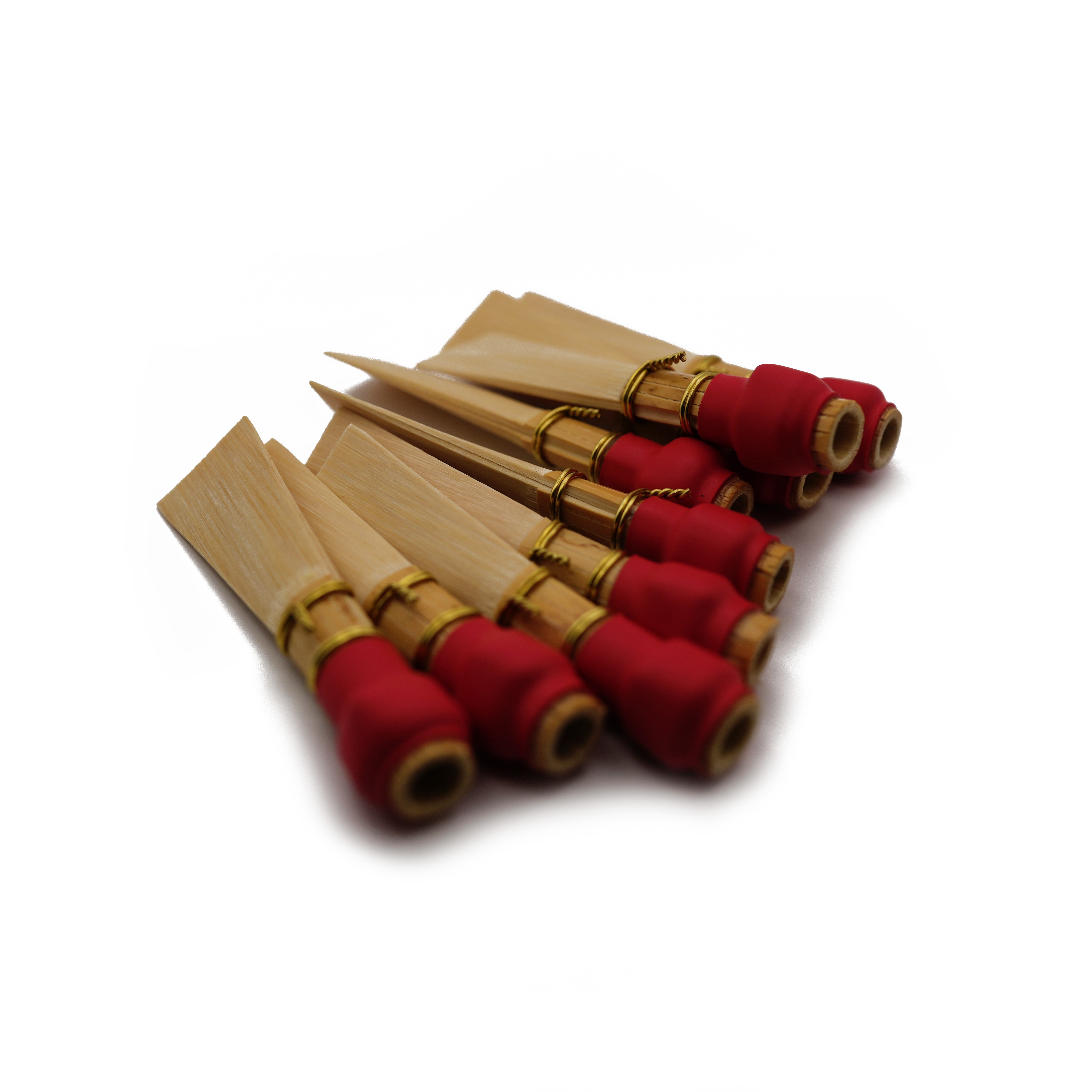
You may have noticed that the prices of our reeds and shipping have gone up. We never take a price change lightly, and you deserve to know exactly why it happened. This page walks you through what goes into every reed, why the time behind each one has become more valuable, how the reeds that don't make it are accounted for, and what has changed with shipping.
What Goes Into One Reed
A finished bassoon reed is not made in one sitting. Cane is a natural material that needs to soak, rest and dry between stages, so every reed passes through our hands many times over several days before it is ready for you. Here is the full journey, step by step. Not every reed starts at step one; more on that below.
-
1
Selecting the Cane
A reed made from scratch starts as a piece of tube cane. We sort it by diameter, density and straightness, and set aside pieces that won't produce a reliable reed. Cane that arrives already processed is checked just as carefully. Good cane is the single biggest factor in a good reed, and not every piece makes the cut.
-
2
Gouging & Shaping
Sometimes bought ready
The cane is split, gouged to an even inner thickness, and cut to shape. These dimensions decide much of the reed's personality: its resistance, stability and pitch tendencies. Precision here saves problems later.
-
3
Profiling
Sometimes bought ready
The outer bark is removed and the blade thinned to a consistent profile. This is what makes one of our reeds play like the next, and it requires careful checking of every blade.
-
4
Forming & Wiring
The soaked blank is folded, wired and formed around a mandrel into its tube. It then needs to dry fully, usually overnight or longer, before it can be touched again. Rushing this step is how reeds end up leaking or unstable.
-
5
Finishing & Wrapping
Once dry, the tip is opened, the wires are adjusted, the tube is sealed and wrapped, and the blade is scraped by hand until the reed responds, seals and centers the pitch the way it should.
-
6
Play-Testing & Settling
Every reed is played, rested and played again. Cane keeps moving during its first sessions, so a reed that seems perfect on day one may need another adjustment on day three. Only reeds that pass this stage are sent to you.
Less Time, More Demand
Our reeds are made by hand by a working bassoonist, not by a machine or a team. That is what makes them good, and it is also the limit: there are only so many hours in a week.
Recently, two things changed at once. New professional duties now take up hours that used to go to the reed desk, and at the same time more of you are ordering our reeds than ever before. The result is that the time available for reed making has shrunk exactly when it is needed most.
We had two choices: speed up and cut corners, or keep our standard and let the price reflect the true value of each hour spent on your reed. We chose quality. Each reed still gets the same attention it always has; there are simply fewer of those hours to go around.
The Reeds That Don't Make It
Cane is alive in a way that plastic and metal are not. Even with careful selection and a patient process, a small share of reeds fail during break-in, the first sessions when a new reed is soaked, played and allowed to settle.
Why a reed fails during break-in
- A crack opens along the blade or at the tip as the cane absorbs water and is vibrated for the first time.
- The tip closes or collapses as the cane settles, and no adjustment brings it back.
- The reed leaks along the sides or loses its stability, so it can no longer hold pitch reliably.
- The cane turns out to be too soft or too hard once it has settled, despite passing every earlier check.
Why it matters for the price
A reed that fails at the end of its journey has already had nearly all of its time and materials invested in it. That work doesn't disappear; it has to be carried by the reeds that do succeed. Rather than hide this cost or pass the risk on to you, we build it into the price of each reed and into the time we plan for each batch.
That is also why our break-in rate being small matters so much to us: every improvement in cane selection and process keeps the price fair for everyone.
How a Reed's Price Is Built
No secret formula. Here is the reasoning behind the number you see on each reed.
Hands-on time
hours × fair rate
Materials
cane, wire, thread, tools
Reeds that succeed
after break-in
- Time
- Every stage we do ourselves, including the waiting between them that has to be planned around. As those hours become scarcer, each one is worth more.
- Materials & tools
- Quality cane, whether raw or already gouged, shaped or profiled (which costs more the further along it comes), including the pieces we reject; plus wire, thread, sealant, and the upkeep of the tools that keep reeds consistent.
- Break-in rate
- Dividing by the reeds that succeed, not by every reed started, is how the small share that fails is accounted for fairly.
Why Shipping Costs More
Shipping prices are set by the carriers, not by us, and they have risen. Postal services and couriers adjust their rates regularly, and on top of the base rate they add surcharges for fuel, residential delivery, remote areas and peak seasons. International parcels can also carry customs handling fees.
Our shipping prices are set to cover what the carriers charge us, along with the protective packaging that gets a fragile reed to your door in one piece. When their prices go up, ours have to follow.
Carrier rate increases
Base rates for parcels are revised by the carriers, usually at least once a year.
Surcharges
Fuel, residential, remote-area and peak-season surcharges are added on top of the base rate.
Protective packaging
Reeds are fragile. Rigid cases and padded mailers cost more than an envelope, but they keep your reeds safe.
Tip: order together
Several reeds ship in the same package, so combining orders is the easiest way to save on shipping.
What Hasn't Changed
Every reed is still made by hand, play-tested and checked before it leaves. Our guides, our support, and our willingness to help you find the right reed are exactly the same. A higher price means we can keep that standard instead of lowering it.
Sold Out? You Still Have Options
With fewer hours available, some reeds will sell out faster than before. We would rather you keep playing than wait. There are wonderful reed makers and colleagues whose work we know and trust, and we are happy to point you to them.
Thank You
Your support is what keeps a small, handmade reed business going. Thank you for understanding, and for trusting us with something as personal as your reeds. If you have any questions about our prices, please write to us. We are always happy to explain.